


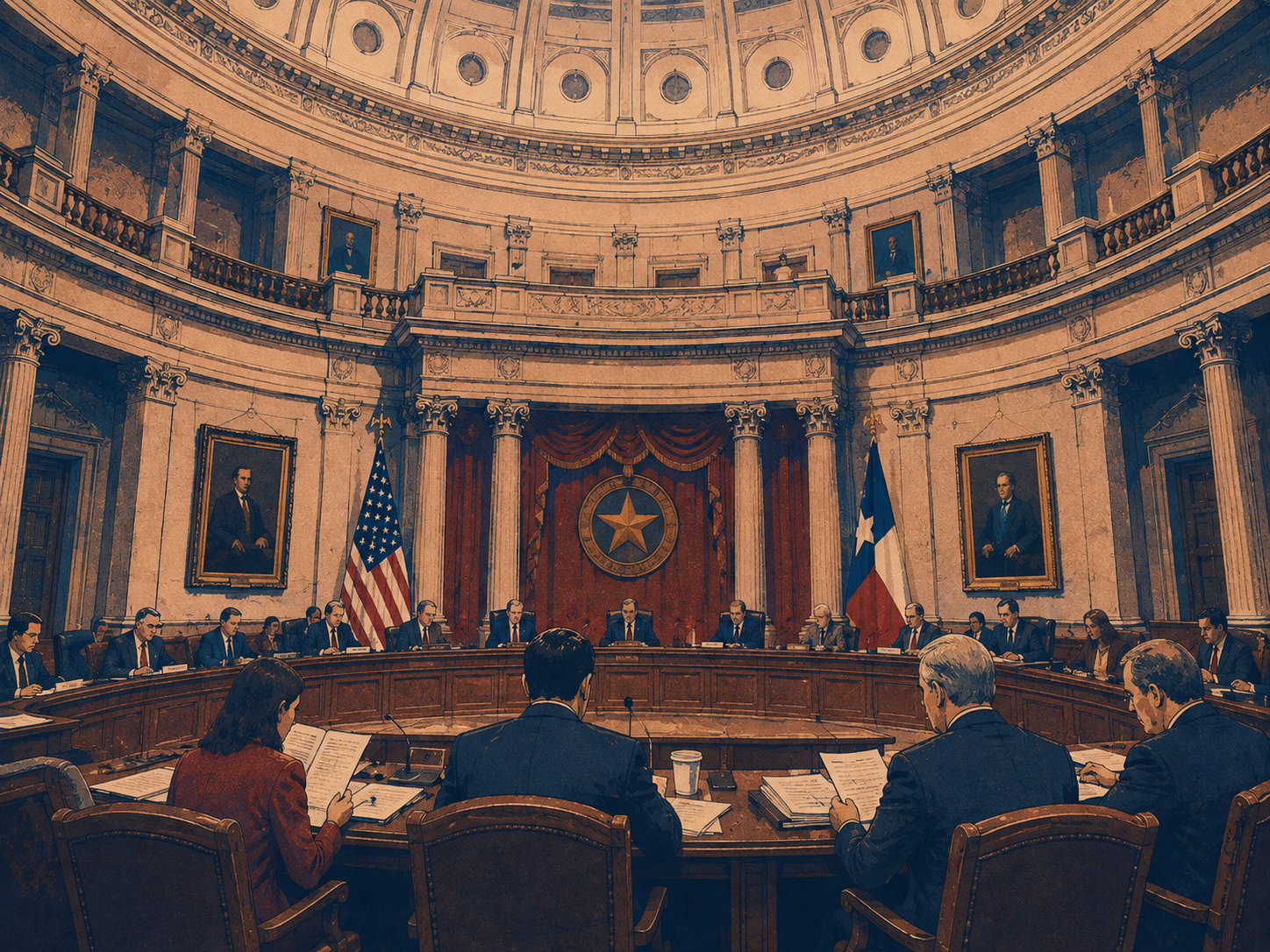
The Texas Legislature meets in regular session only once every two years, and 2026 is an off year — the 90th Legislature won't gavel in until January 12, 2027. That doesn't mean Austin has gone quiet. Under the state's biennial system, Senate and House committees spend the interim between sessions studying "interim charges" — formal research and policy assignments handed down by the lieutenant governor and House speaker — that typically form the backbone of legislation once lawmakers reconvene.
Lt. Gov. Dan Patrick released his first round of charges to the Texas Senate on January 30, with additional rounds following into the spring, directing committees to hold public hearings and report back findings before session begins. Property tax relief tops the list. Patrick's charges direct the Senate Finance Committee to study what his office has dubbed "Operation Double Nickel" — lowering the age at which homeowners can freeze their school district property taxes from 65 to 55 — alongside proposals to raise the homestead exemption to $180,000 for homeowners under 55 and $240,000 for seniors. For a state where property tax bills remain one of the most consistent sources of voter frustration, the charges signal property tax relief will again be a marquee issue heading into 2027, building on relief packages passed in recent sessions.
Grid reliability is the other major thread running through this year's charges. The Senate Business and Commerce Committee has been directed to examine the integrity of the supply chain feeding the Texas electric grid, including risks posed by foreign-sourced components and hostile foreign entities — a continuation of lawmakers' post-Winter Storm Uri focus on grid resilience, now extended to cybersecurity and supply-chain vulnerabilities as data centers and industrial demand strain generation capacity statewide.
Beyond taxes and the grid, Patrick's charges touch a wide range of other priorities reported on by outlets including the Texas Tribune and FOX 7 Austin, from local government budget growth to a review of foreign law's role in Texas courts. None of these charges carry the force of law on their own — they are instructions for study and testimony, not bills — but they function as an early blueprint for what Republican leadership intends to prioritize once the Legislature is back in session, and they give the public and advocacy groups a preview of what's likely to dominate committee hearings between now and next January.
For Central Texas readers, the interim period matters practically as well as politically: committee hearings on these charges are held at the Capitol in Austin throughout the year and are open to public testimony, giving residents a chance to weigh in on property tax and grid policy well before any bill is filed. The House is expected to release its own parallel set of interim charges, and both chambers' committee reports will shape the opening weeks of the 90th Legislature when it convenes in January 2027.