

For most of last winter, it looked like Dallas Area Rapid Transit could be headed for a genuine unraveling — one that threatened to hit just as North Texas prepared to host nine FIFA World Cup matches this summer. Six suburban member cities voted last fall to put withdrawal from DART before their own voters, frustrated that they were paying tens of millions of dollars a year into a regional system many residents felt they rarely used. Plano Mayor John Muns captured the sentiment bluntly: "We're paying an extraordinary amount for the service that we're getting back."
DART's math is straightforward and, to its critics, hard to defend: member cities fund the agency through a one-cent sales tax, and that money is pooled regionally rather than spent strictly where it's collected. In fast-growing, car-dependent suburbs with light rail ridership far below Dallas proper, city councils increasingly asked whether residents were subsidizing service they didn't use. A formal withdrawal process, rarely invoked in DART's four-decade history, suddenly became a live threat in six cities at once — a scenario that could have forced DART to shutter stations and cut routes only months before the World Cup brought an expected wave of visitors to the region.
DART's board responded in February with what KERA News described as a "Hail Mary" deal: a restructured funding agreement returning roughly $360 million to member cities over six years, paired with governance changes giving each of the 13 member cities its own seat on the DART board — reducing the city of Dallas's outsized voting power in the process. The deal was enough to persuade Plano, Irving and Farmers Branch to cancel their withdrawal elections outright. Richardson's council separately approved the funding and governance restructuring as well.
Three cities pressed ahead to the ballot anyway. On May 2, voters in Addison and University Park chose to stay — Addison by roughly 70%, University Park by a narrower 54% — while Highland Park voters went the other direction, with close to 70% choosing to leave. Highland Park's DART service ended May 14, the day after election results were canvassed. Some bus routes still pass through the town on their way elsewhere, but they no longer stop within Highland Park's city limits, and the town's roughly 9,000 residents lost their direct rail and bus access to the regional system.
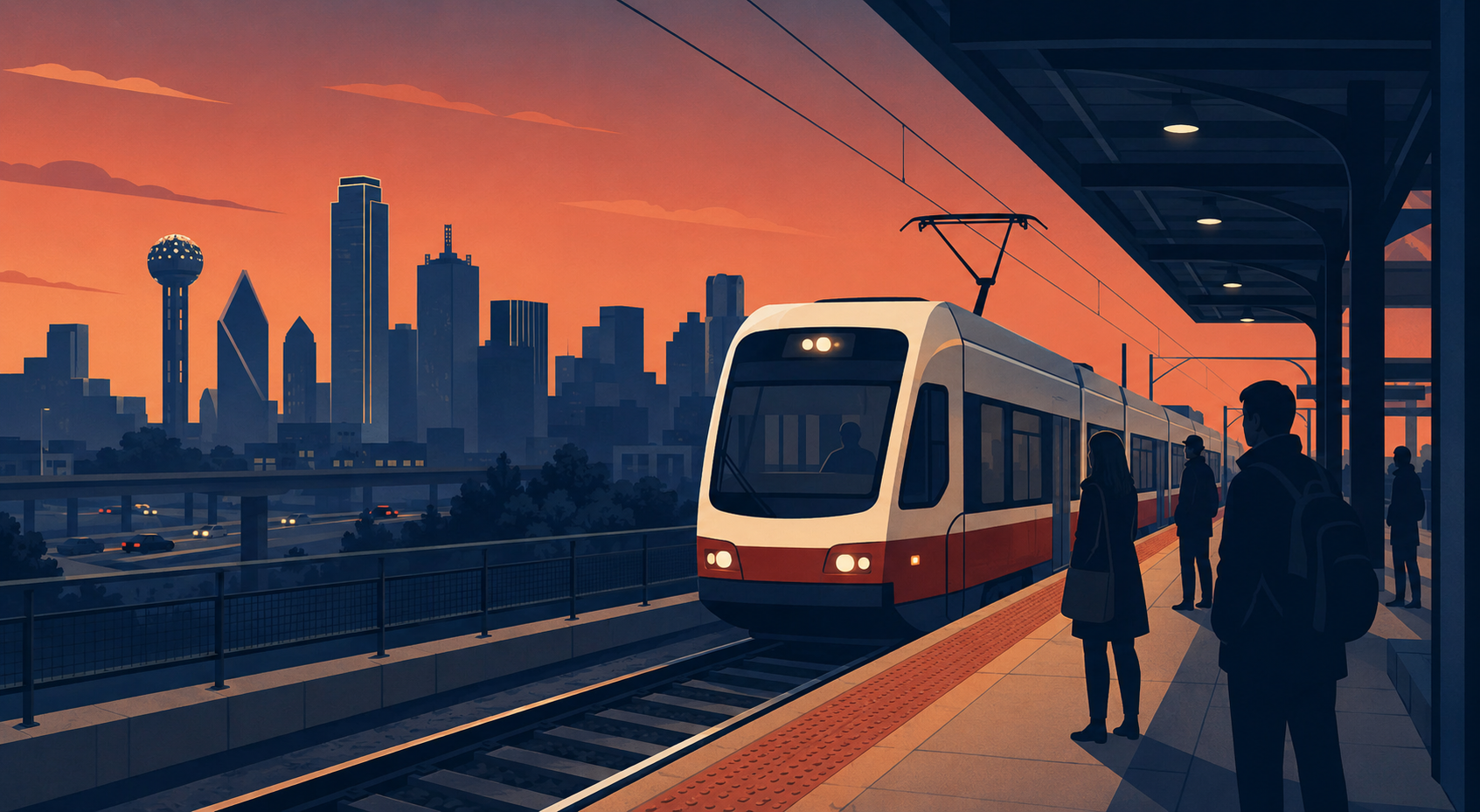
The stakes of getting a deal done in time became clear once the World Cup arrived. DART carried fans to and from AT&T Stadium in Arlington — which has no mass transit system of its own — throughout the tournament's 39 days, from June 11 to July 19, using a combination of light rail, the Trinity Railway Express and a fleet of charter buses. According to figures reported by Mass Transit Magazine, light rail ridership rose 16% and TRE ridership jumped 55% compared to the same period a year earlier, with DART logging more than 2 million passenger trips across all modes in the tournament's first three weeks alone. Riders and outside observers were, in the words of one industry report, "pleasantly surprised" by how the system held up.
For Texas taxpayers in DART's member cities, the episode is a case study in how regional government funding fights actually get resolved — not usually through the ballot box, but through last-minute deals cut once the threat of withdrawal becomes real. Suburban leaders got real concessions: more money back, more seats at the table. Highland Park residents got what they voted for, a clean break, though at the cost of the convenience regional transit offered. And DART itself heads into its next budget cycle smaller, with less unilateral control from Dallas City Hall, and with a World Cup performance it can point to as evidence the system still works when it has to.