


For the first time in nearly 600 days, Corpus Christi is no longer under its strictest drought watering rules. City Manager Peter Zanoni announced during an Aug. 4 press conference that the city was downgrading from Stage 3 to Stage 2 of its Drought Contingency Plan, easing restrictions that had governed lawn watering, car washing and other outdoor water use across the Coastal Bend since the drought took hold in late 2024.
"It's been a long time," Zanoni said at the announcement, "but we've achieved a 30% — actually greater — Western reservoir level." Under Stage 2 rules, residents can now water lawns once every other week, a loosening from the once-a-month schedule allowed under Stage 3. The city's Stage 2 website, launched to walk residents through the new rules, lays out the specifics for landscape irrigation, pools and commercial water use.
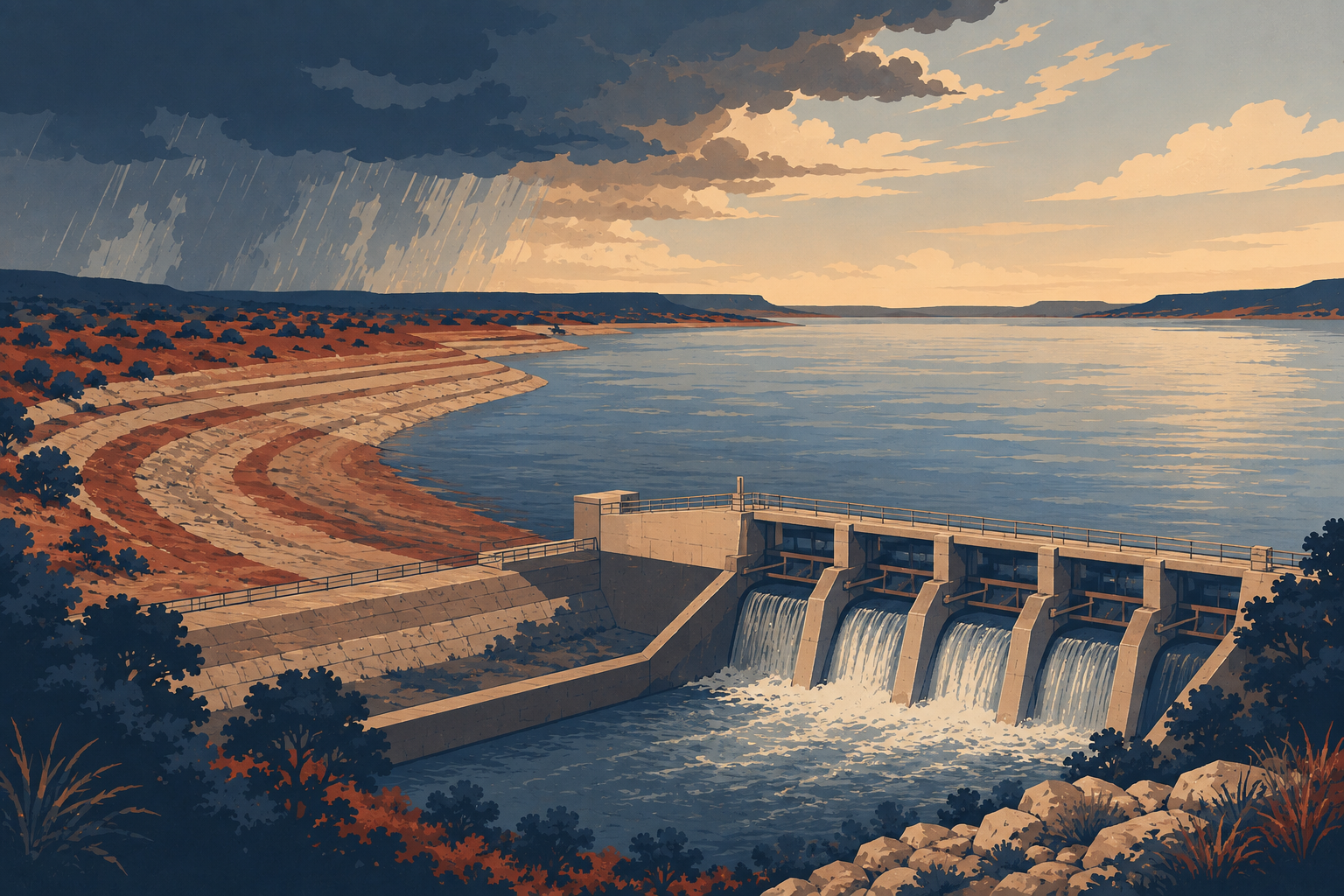
The turnaround followed an unusually wet July across South Texas. Combined storage in Lake Corpus Christi and Choke Canyon Reservoir — the two reservoirs that supply the city and much of the surrounding region — climbed above 30% after heavy watershed rainfall boosted inflows into the Nueces and Frio rivers. Lake Corpus Christi alone jumped to 65% capacity, a 33-percentage-point gain in a single week, according to city officials. Choke Canyon, which reached a historic low of roughly 7.4% capacity in April, stood at 24.4% as of Aug. 13, according to data from the state's waterdatafortexas.org tracker — still well below full, but a marked recovery from the spring's record lows that also affected Lake Corpus Christi, which had bottomed out near 8.5%.
City officials say the recovery reflects more than just rainfall. Corpus Christi has spent recent years investing in alternative water supplies — including new groundwater wells, reclaimed water infrastructure, a seawater desalination project and the Mary Rhodes Pipeline — while asking residents to conserve. Average household water consumption in the city fell from roughly 6,000 gallons to about 4,500 gallons per month during the drought, a reduction city leaders credit with helping stretch the shrinking reservoir supply during the worst of the crisis. As a result of the combined effect of conservation, infrastructure investment and rainfall, the city's projected date for a formal Level 1 water emergency declaration has been pushed back from an earlier November 2026 estimate to September 2028.
For Gulf Coast readers outside Corpus Christi proper, the story is a reminder of how closely South Texas communities remain tied to a handful of shared reservoirs, and how quickly conditions can shift with a single wet month after nearly two years of scarcity. City officials have been careful to frame the downgrade as relief, not resolution — Stage 2 still carries real restrictions, and reservoir levels remain far from historical norms even after the July rains. Corpus Christi Water continues to post regular updates on its "Securing Water, Together" site as it tracks reservoir levels heading into the fall.