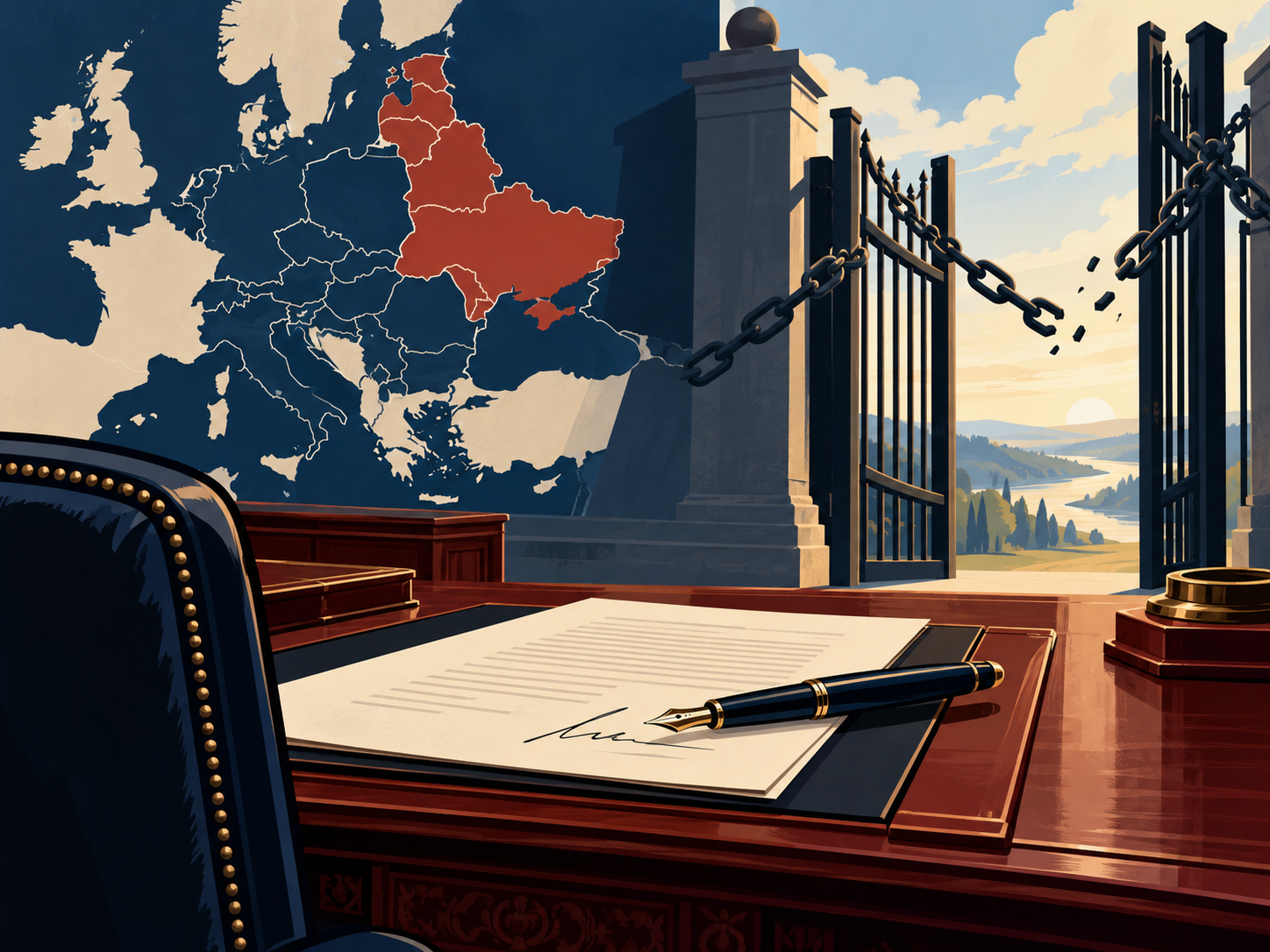
President Donald Trump on Friday, Oct. 17, signed an order waiving key provisions of the Graham Act, a Russia sanctions law that was to take effect the next day, ABC News reported. The law, which Trump signed last month after large bipartisan majorities in Congress passed it, targeted Russian officials and oligarchs, banks and the “shadow fleet” of tankers used to evade sanctions. Its Russia provisions are scheduled to expire in 2031.
According to ABC, the waiver covers tariffs of up to 500% on Russian goods such as oil and gas, tariffs of up to 100% on the top five buyers of Russian crude and gas and on the top five countries helping Russia evade oil sanctions, sanctions on foreign banks doing significant business with Russian state-owned banks, and bans on buying Russian sovereign debt and on U.S. investment in Russia. It does not undo sanctions imposed under earlier executive orders, but it waives the statute's requirement that they stay in place, which opens the way for unilateral action on them. It also waives a provision that would have let sanctions end if Russia signed a peace deal accepted by Ukraine, while Congress keeps the power to block any termination. The waiver stays in effect until the president or secretary of state decides otherwise.
The order says only that the waivers are in the national interest. A White House spokesperson said the act gives the president more authority to pursue a peace deal and that enforcing the sanctions now would impede negotiations, ABC reported. The article also links the move to energy prices: the Treasury Department recently issued a license through April allowing Russian diesel imports, part of a deal the article ties to rising diesel prices that Trump has sought Putin's help to ease.
The reaction crossed party lines. Sen. Chuck Schumer, D-N.Y., said Trump “just gave Putin the best birthday gift he'll get this year.” Republican Sen. Thom Tillis of North Carolina called the move “Beyond irresponsible.” Texas Sen. John Cornyn said the law's namesake, the late Sen. Lindsey Graham, who died suddenly in July, “would be appalled,” and shared an article calling for Congress to investigate. Cornyn, Tillis, Mitch McConnell and Susan Collins had urged Trump earlier to rescind the diesel deal and implement the sanctions. Rep. Thomas Massie, R-Ky., who opposed the law, welcomed the use of executive authority. Ukrainian President Volodymyr Zelenskyy wrote on X that undoing it “definitely helps only the Russians” and “certainly does not stop the war.”
Why it matters to Texas readers. The decision touches two Texas interests at once. Russian oil and diesel sold on world markets compete with Texas production and set prices Texans pay at the pump. And Texas's senior senator, a Republican, is among those publicly objecting. Conservatives are divided on this question, with some favoring maximum pressure on Moscow and others arguing the president needs flexibility to negotiate an end to the war; both views are represented in the reporting. Readers should weigh the White House's stated rationale against the objections of lawmakers who voted for the law.
Open question: the order's text does not give a specific reason beyond “national interest,” and we could not confirm the terms of the diesel license beyond ABC's description.