

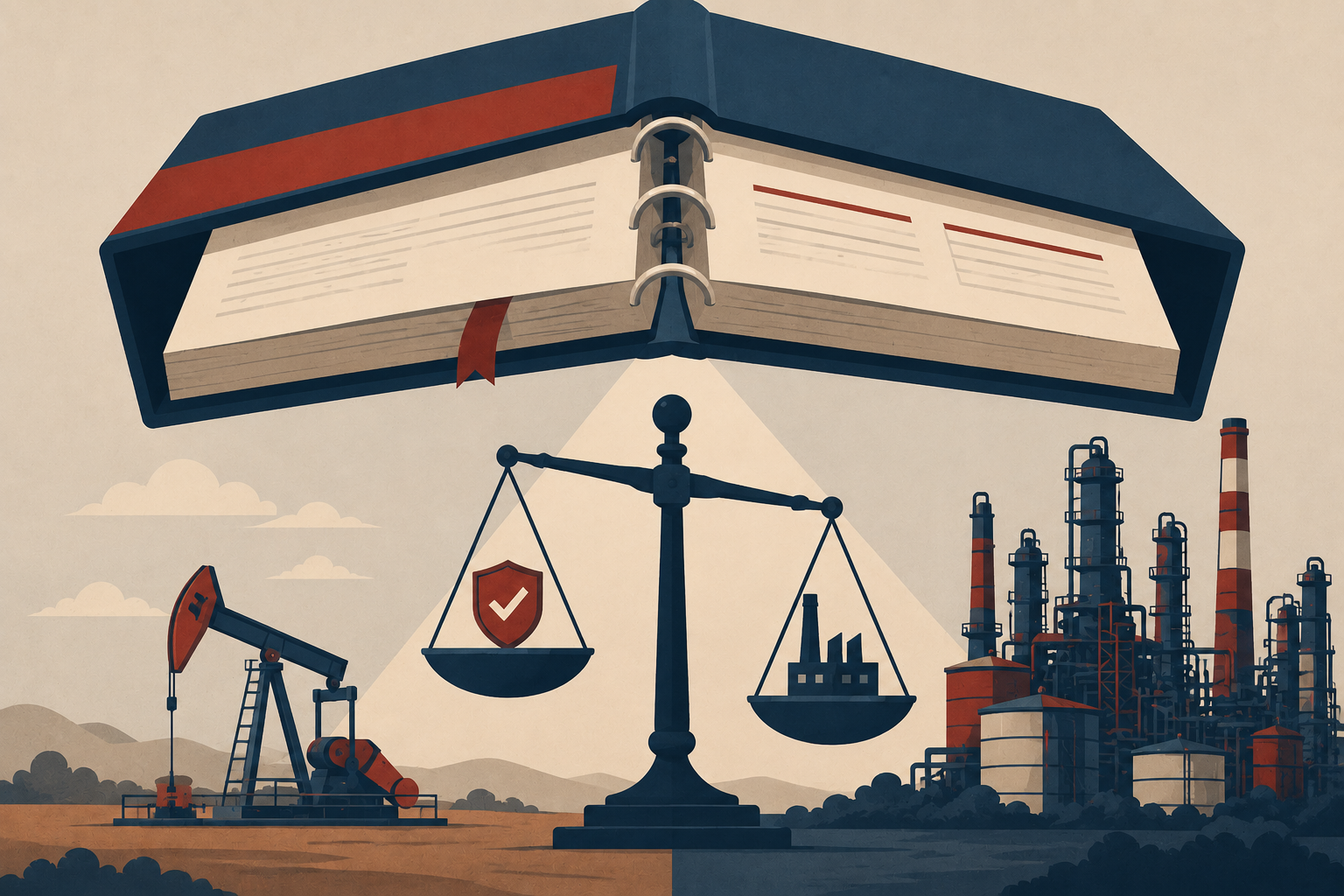
U.S. Rep. August Pfluger, R-San Angelo, and U.S. Sen. Cynthia Lummis, R-Wyo., introduced companion legislation this spring aimed at giving the smallest oil and gas producers in the Permian Basin and other domestic fields relief from federal methane-monitoring rules that industry groups say were designed with major operators in mind, not the family-owned businesses running a handful of low-output wells. The Protect Domestic Oil and Gas Small Business Act of 2026 — S. 4619 in the Senate, with a House companion led by Pfluger — would amend the Clean Air Act to exempt "marginal wells" from the Environmental Protection Agency's Section 111 performance standards, which require monitoring, reporting, and leak detection and repair for methane and other greenhouse gas emissions.
The bill defines a marginal well narrowly: an oil site averaging 15 barrels of oil equivalent per day or less, or a natural gas site averaging 90,000 cubic feet per day or less. Producers in this category — often called "stripper wells" in the industry — account for roughly 6% of total U.S. onshore oil production nationally, according to industry estimates cited by the Independent Petroleum Association of America (IPAA), but represent a disproportionate share of the compliance burden under EPA's current methane framework, since the monitoring and reporting costs are largely fixed regardless of how much a given well actually produces.
Pfluger, whose district covers much of the Permian Basin, has argued for years that one-size-fits-all federal emissions rules hit small West Texas operators harder than the large companies the regulations were arguably written to target. In earlier remarks on a related EPA methane rule, he said it "imposes excessive and costly restrictions on energy producers in regions like the Permian Basin that I represent and others around the nation," warning that compliance costs would ultimately be passed on to consumers already dealing with inflation. Supporters of the new bill make a related economic argument specific to marginal wells: because the fixed cost of methane monitoring equipment and reporting doesn't scale down with a well's low output, some small operators say continued compliance could force them to plug and abandon wells that are still marginally profitable to operate — but not profitable enough to absorb regulatory overhead designed for a much larger operation.
The legislation has drawn formal endorsements from a cluster of industry groups representing exactly the producers it targets: the IPAA, the Petroleum Association of Wyoming, the National Stripper Well Association, and the Texas Alliance of Energy Producers. Those groups frame the bill as right-sizing regulation to match a producer's actual environmental footprint and economic capacity, rather than eliminating emissions oversight altogether — the exemption applies specifically to the lowest-output wells, not to mid-size or major operators.
Environmental advocates have historically opposed marginal-well carve-outs of this kind, arguing that stripper wells collectively still contribute meaningfully to methane emissions even though any single well produces little oil, and that exempting a large population of low-output wells from monitoring requirements could undercut the overall goal of reducing methane leaks from the oil and gas sector. As of this writing, the bill remains in committee in both chambers with no scheduled floor vote; its fate will likely hinge on whether it can be attached to a larger energy or appropriations package before the current Congress adjourns. For Permian Basin communities across West Texas, where small independent operators are a meaningful part of the local economy, the outcome will shape how many marginal wells stay in production versus getting plugged in the years ahead.