


Editor's note: An earlier teaser on this page stated that the U.S. and Iran had signed a deal reopening the Strait of Hormuz. Reporting from early-to-mid August shows that framing was premature — negotiations were close but unresolved, and prices rose rather than settled. This article reflects the corrected, sourced timeline.
Global oil markets stayed on edge through the first half of August as talks to reopen the Strait of Hormuz — the narrow waterway through which roughly a fifth of the world's oil supply normally passes — kept sliding just out of reach. The strait has been severely constrained since the U.S.-Israel war with Iran began in late February 2026, and by early August, U.S., Iranian and Omani negotiators appeared to be closing in on an interim arrangement. Reported terms would have set up a 60-day pilot framework allowing commercial vessels to enter the Persian Gulf through an Iranian-controlled route and exit through one controlled by Oman, according to regional reporting cited by Axios and Al Jazeera. Treasury Secretary Scott Bessent and President Trump both signaled in early August that an announcement could be close.
It didn't hold. Iranian Foreign Minister Abbas Araghchi said Iran and Oman were nearly finished with their side of the arrangement, but that the strait would not actually reopen until Washington met additional conditions — easing sanctions on Tehran and paying war reparations — demands the U.S. has not agreed to. Iran also said any agreement with Oman would bar U.S. and Israeli vessels from using the new routes, a detail NPR reported could complicate final sign-off. By Aug. 10 and 11, renewed attacks on shipping in the region further eroded confidence in a near-term breakthrough. "Markets have not completely lost hope for a deal, but confidence is clearly eroding," analysts told Al Jazeera, noting that the longer talks drag on without visible progress, the more skepticism builds that a workable agreement can be reached quickly.
The price action reflected that uncertainty. Brent crude rose more than 2% overnight heading into Aug. 12, pushing the international benchmark to roughly $89.53 a barrel for October delivery — about 24% higher than before the war began in late February, according to CNBC and Al Jazeera reporting. The U.S. Energy Information Administration's August Short-Term Energy Outlook does not expect Middle East oil production to return to near pre-conflict levels until early 2027, and projects Brent will average around $87 a barrel for 2026 as a whole — an elevated, war-premium price that has kept pump prices higher nationally, including in Texas, than they would otherwise be.
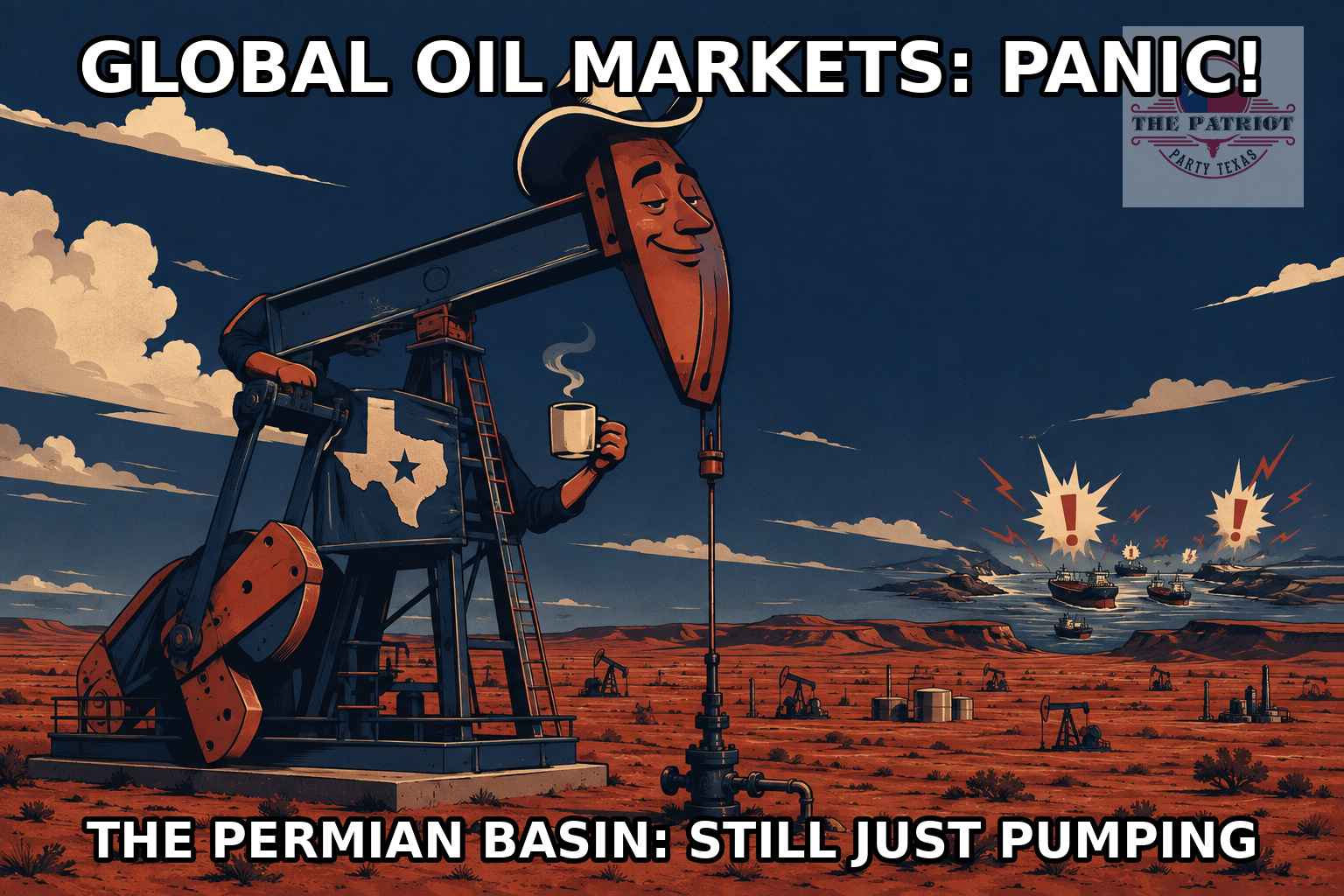
Closer to home, the disruption has had a modestly bullish effect on West Texas drilling. Baker Hughes' weekly rig count, reported Aug. 7, showed the Permian Basin — the nation's largest oil-producing shale play, spanning West Texas and southeastern New Mexico — adding three rigs to reach 263, the most since July 2025, even as the overall U.S. rig count held roughly flat that week. Producers in the Permian have generally kept output climbing at a modest pace through 2026 regardless of the geopolitical drama half a world away, a reminder of why the basin remains central to both Texas's economy and the nation's energy security. For Texas readers, the takeaway is twofold: higher global crude prices tend to flow through to severance-tax revenue and drilling-related jobs in the Permian, even as the same volatility shows up at the gas pump for everyday Texans — and neither trend will resolve until Washington, Tehran and Muscat actually finish the deal that, as of this writing, remains unsigned.