


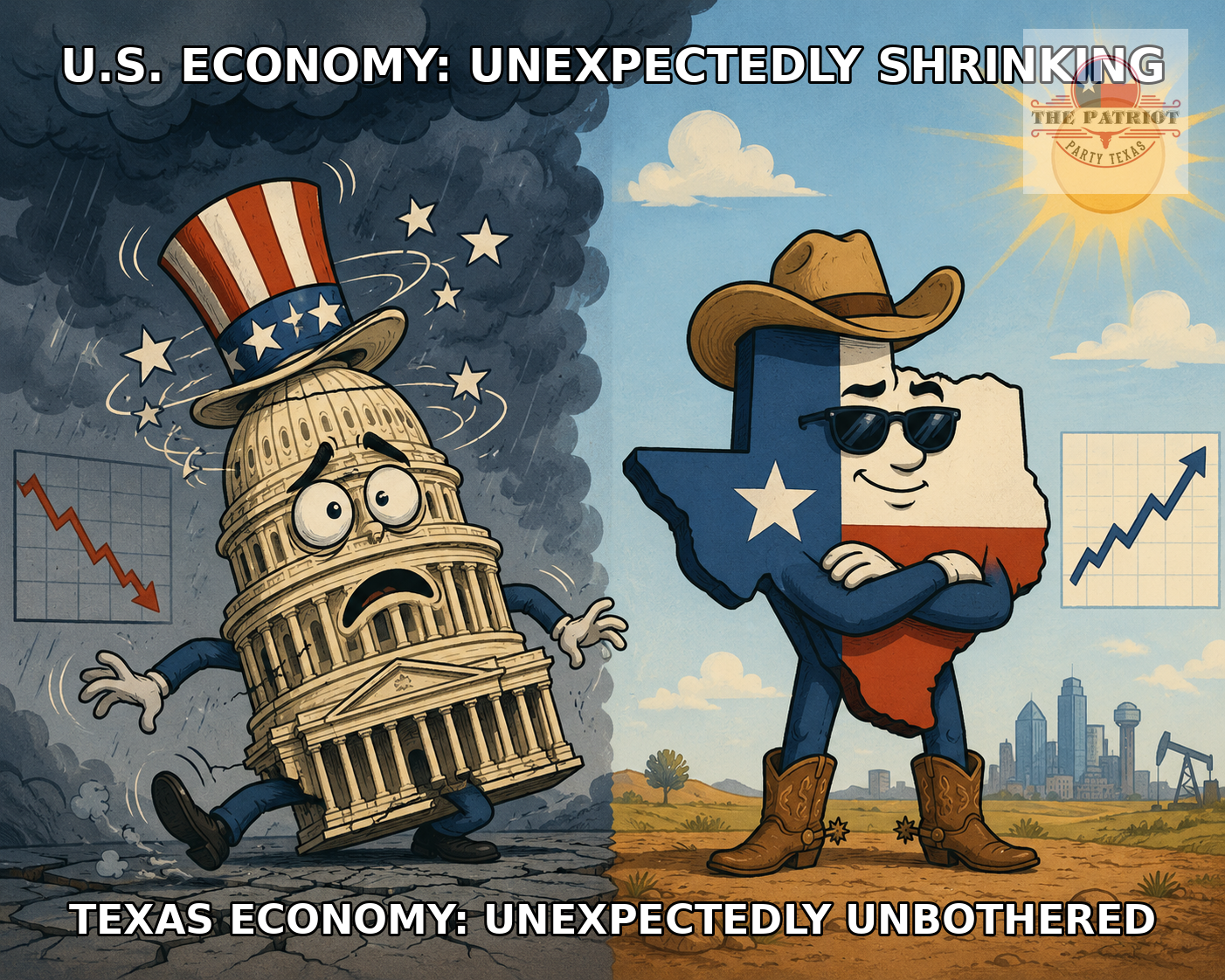
The U.S. Labor Department's July jobs report, released Aug. 7, landed as a genuine surprise: nonfarm payrolls fell by 23,000 for the month, a sharp reversal from the roughly 80,000-job gain economists polled by LSEG had expected. The decline was driven largely by a 53,000-job drop in government employment, along with softness in retail and in leisure and hospitality, and slower-than-usual growth in health care — historically one of the labor market's steadiest sectors. Private-sector payrolls did increase, up about 30,000 for the month, meaning the entire net loss traced back to public-sector cuts rather than a broad-based private hiring slowdown.
Almost as striking as the July number itself were the revisions to the two months before it. May's initial gain of 129,000 jobs was revised down to just 63,000, a cut of 66,000. June's reported gain of 57,000 was revised down to only 20,000, a cut of 37,000. Combined, that's 103,000 fewer jobs across May and June than the government had originally reported — the kind of revision that tends to reshape how economists read the underlying trend, since it suggests the labor market had already been cooling for months before July's headline miss made it obvious.
The unemployment rate, meanwhile, actually ticked down slightly to 4.1% — but for a reason that isn't especially reassuring. The dip came largely from a further decline in the number of people either holding a job or actively looking for one, meaning fewer Americans in the labor force rather than more of them finding work. Wage growth also cooled: the 12-month increase in average hourly earnings slipped to 3.2%, the lowest reading since May 2021, adding to the picture of a labor market losing momentum even as headline unemployment stayed historically low.
Texas, notably, did not follow the national pattern. The Federal Reserve Bank of Dallas's July 17 forecast update raised its projection for 2026 Texas job growth to 2.0%, and state employment actually accelerated in June, growing at an annualized 3.5% rate and adding 42,100 jobs that month alone — pushing year-to-date growth to 1.9%, close to the state's long-run average. The Dallas Fed's full-year forecast now calls for roughly 286,000 jobs added statewide in 2026, which would bring total Texas employment to about 14.6 million by December. Growth has been uneven across the state's metros: Austin led with 5.8% annualized growth, followed by Fort Worth at 3.9% and Dallas at 3.7%, while Houston grew more modestly at 2.7% and San Antonio posted a 3.1% decline. Broadly, Texas and Florida were cited as the two large states still showing positive net job growth even as states like California and New York saw larger payroll declines — a contrast regional economists attributed to Texas's energy sector and continued in-migration.
For Texas readers, the July report is a reminder that national headlines don't always describe the Texas economy accurately. A weak national jobs report and a round of ugly revisions are real warning signs for the broader U.S. economy heading into the fall — but with energy activity picking back up in the Permian Basin and population growth still fueling metro-level hiring in Austin, Dallas-Fort Worth and beyond, the state's labor market has so far avoided the softening showing up in the national numbers. Whether that gap holds through the rest of 2026 will depend heavily on how the broader national slowdown, if it continues, eventually filters down into state-level demand.